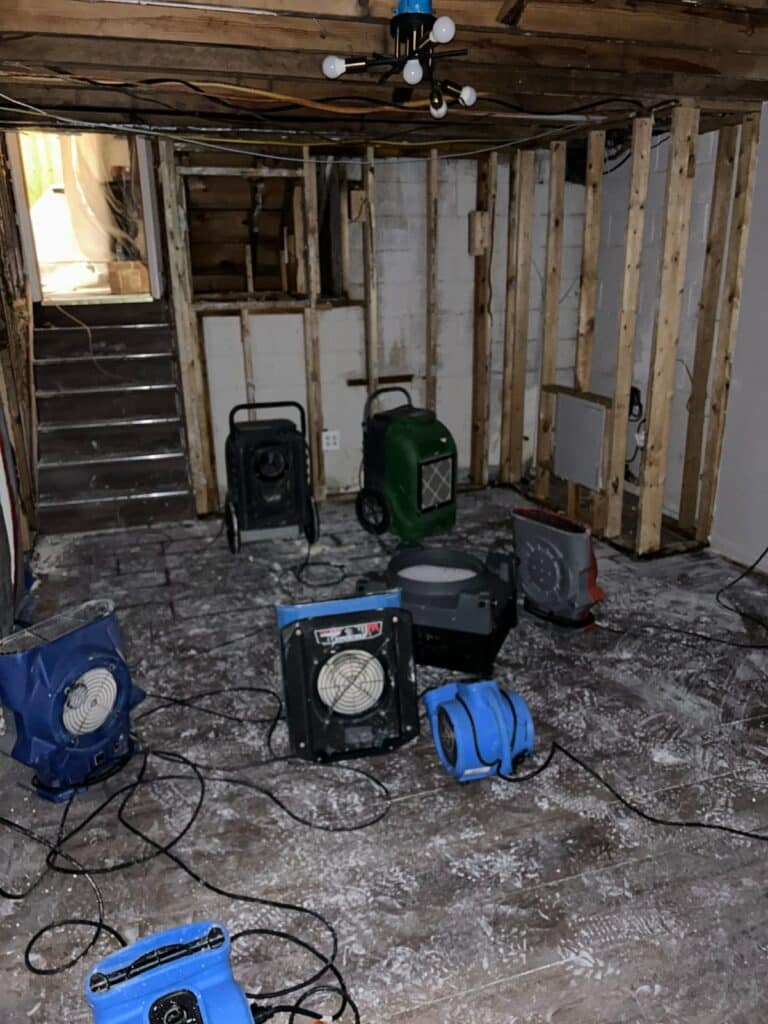
Have you ever heard that dreaded drip-drip sound during a rainstorm? Nobody wants water coming into their home from above! Finding and fixing a roof leak can be tricky, but catching it early saves you big bucks in the long run. Today, we’re talking about how to spot those sneaky drips, common trouble spots, and when to call in the pros for help with your roof leak problems.
Get Help Now
Advanced Restoration Solutions offers damage restoration services in Maryland, Virginia, and Pennsylvania.
How to Spot a Roof Leak Before Water Damage Spreads
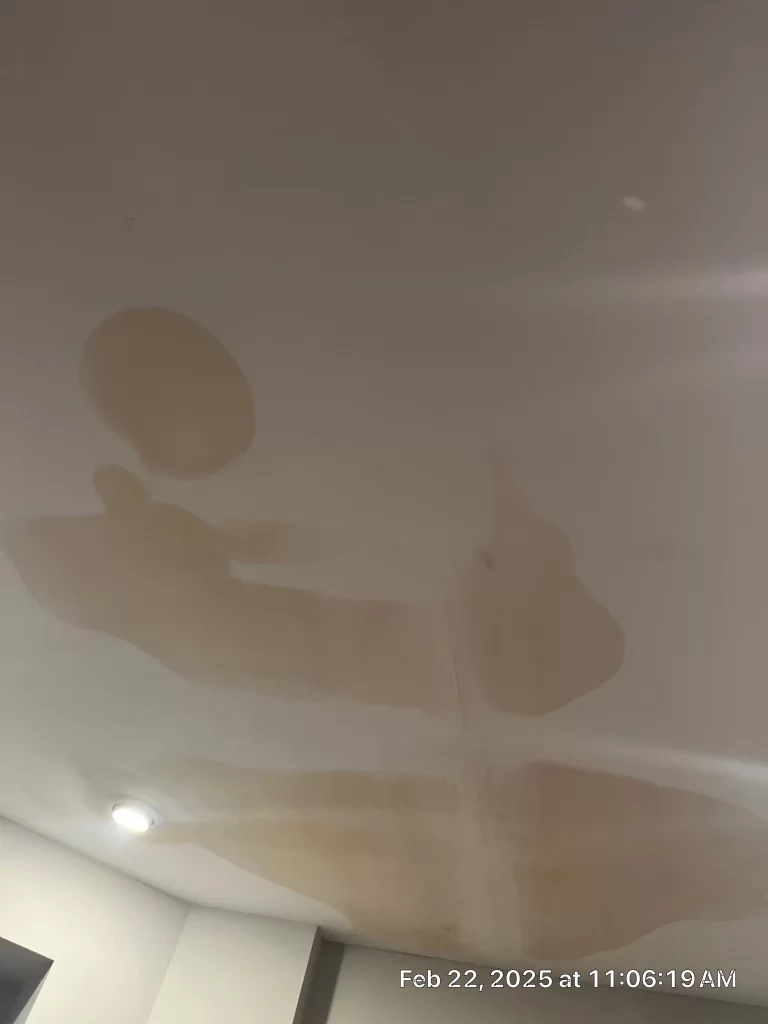
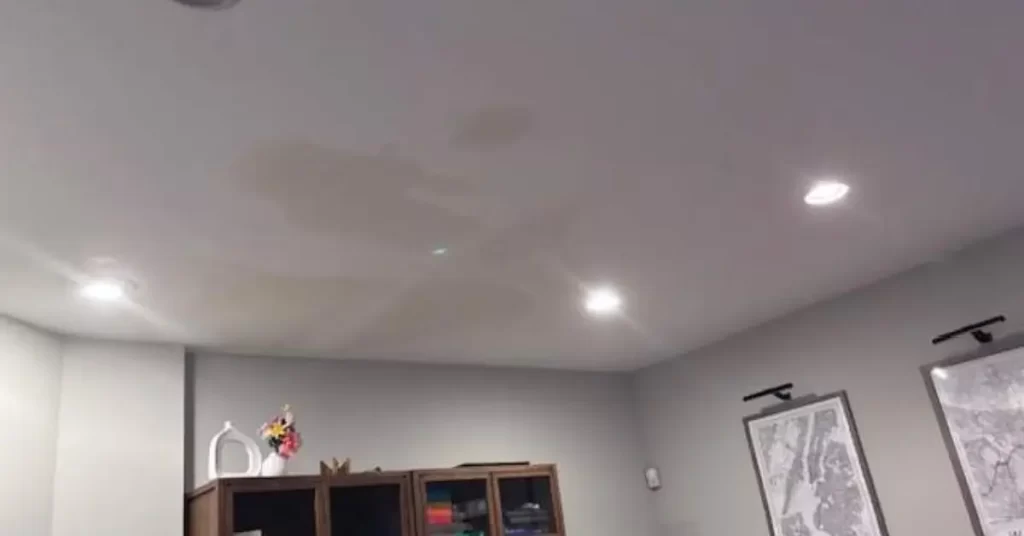
It can be hard to spot a water leak before the damage spreads, but water always leaves clues when it’s getting into your home. Look for dark or wet spots forming on your ceiling – these are often the first sign of a roof leak. Check your attic regularly with a flashlight, especially after heavy rain. Look at the underside of the decking for wet spots or water stains.
You might also notice peeling paint, water stains on walls, or mold growing in corners. These symptoms often appear far from where the actual roof leak started. Water travels along rafters and beams before dripping down, making the source hard to pinpoint. A musty smell in rooms could also indicate hidden moisture issues that need attention.
Common Areas Where Roof Leaks Typically Form
The most common areas where damage or intrusion happens around things that penetrate your home’s top covering. Chimneys, vents, and skylights are prime spots for problems. The flashing (metal pieces) around these areas can crack or come loose over time.
Valley areas where two slopes meet are also frequent trouble spots where a roof leak can form. Leaves and debris collect here, holding moisture against the surface. Damaged or missing shingles create vulnerable areas too. Even tiny cracks can let moisture seep in during heavy downpours. Age is another factor – materials naturally deteriorate over time, especially in areas with extreme weather conditions.









Are DIY Roof Leak Repair Methods for Homeowners Good?
Some minor issues can definitely be tackled by with DIY methods. For small problems, DIY fixes might work well as temporary solutions for a simple roof leak. You can apply roofing cement to cracked flashing or replace a few damaged shingles yourself.
However, there are serious safety concerns to consider before climbing up there. Falls are common and can cause severe injuries. Plus, without proper training, you might miss underlying issues or actually create new problems. DIY repairs are best for:
- Very small, clearly visible damage
- Temporary fixes during good weather
- Homes with easily accessible, low-slope areas
- Simple shingle replacement
- Applying sealant around flashing
Even with these repairs, consider them temporary until a professional can assess the full situation.
When Your Leaky Roof Needs Professional Attention
Some leaky roof situations always call for professional attention. If you’ve tried DIY fixes but the roof leak persists, it’s time to call a pro. Multiple or large wet areas inside your home suggest a serious problem that needs proper attention.
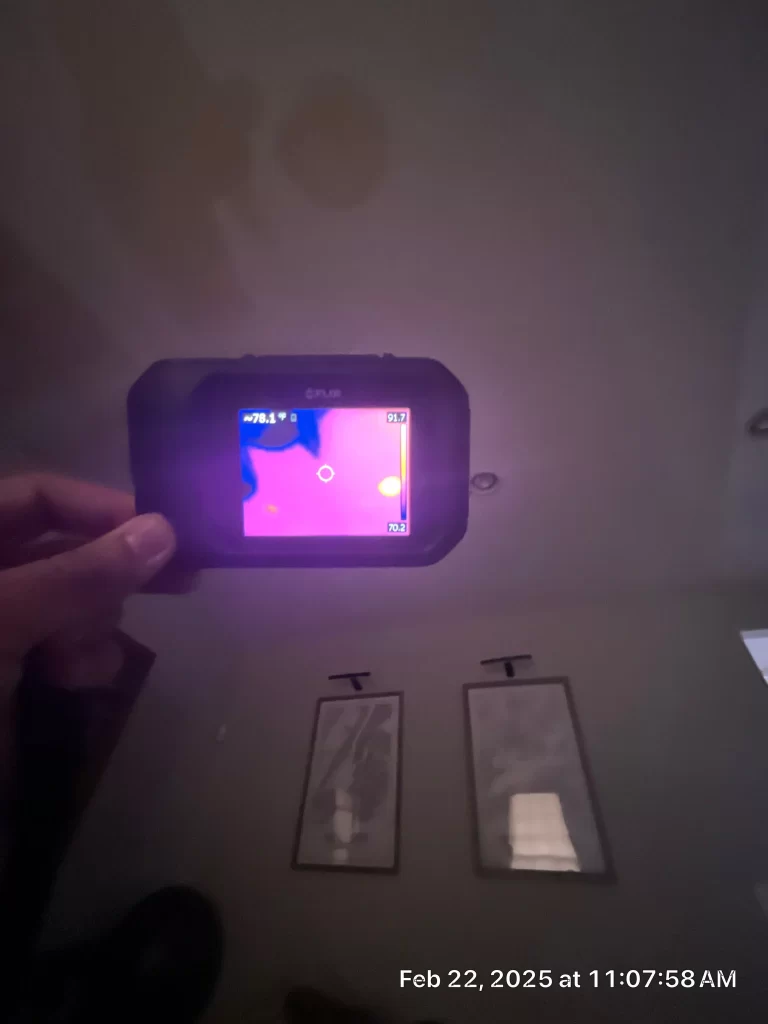
Professionals have specialized equipment to find hidden moisture and address the true source of problems. They can safely inspect hard-to-reach areas and properly assess structural concerns. Attempting complex repairs without proper knowledge can void warranties and even violate building codes. Most importantly, professionals can spot potential issues before they become major headaches.
Preventing Future Roof Leaks: Maintenance Tips to Protect Your Home
Regular maintenance is the best way to avoid future callbacks to our amazing team alltogether. Clean your gutters at least twice yearly to prevent backups. Remove leaves, branches, and debris that can trap moisture against the surface and possibly cause a roof leak down the road.
Schedule professional inspections every 1-2 years, even if everything seems fine. Trim overhanging tree branches that can scrape and damage materials during storms. Replace cracked caulking around vents and other penetrations before water finds its way in.
After severe weather, do a quick visual check from the ground using binoculars. Look for displaced materials or obvious damage. The small cost of preventive maintenance is nothing compared to the expense of major water damage repairs. Taking care of your home’s protective covering now means fewer emergencies and longer lifespan for one of your biggest investments.
FAQ About Common Causes Of Roof Leaks
How do I find the source of a leak?
Check your attic during rainfall with a flashlight. Look for water trails along beams or wet spots on decking. Work upward from ceiling stains, as water often travels before dripping down. Examine flashing around chimneys, vents and valleys where slopes meet.
What are the common signs of a leak?
Water stains on ceilings or walls are telltale indicators. You might notice peeling paint, damp insulation, or mold growth in corners. Musty odors in certain rooms suggest hidden moisture problems. Check for damaged or missing shingles from ground level using binoculars.
Is it normal for a leak in heavy rain?
No, a properly maintained covering should protect your home in all weather conditions. While very severe storms might overwhelm even good systems, regular leaking during heavy rain indicates damage or deterioration that needs immediate attention to prevent structural problems.